Stop Shipping Features. Start Building Meaning.
How product narrative creates alignment, differentiation, and durable growth
Most companies think they have a messaging problem.
They do not.
They have a narrative problem.
They can describe what the product does. They can list features. They can point to differentiators. But if you ask five executives why the product exists, what market shift it responds to, and why it wins long term, you will get five different answers.
That inconsistency is not cosmetic. It is strategic.
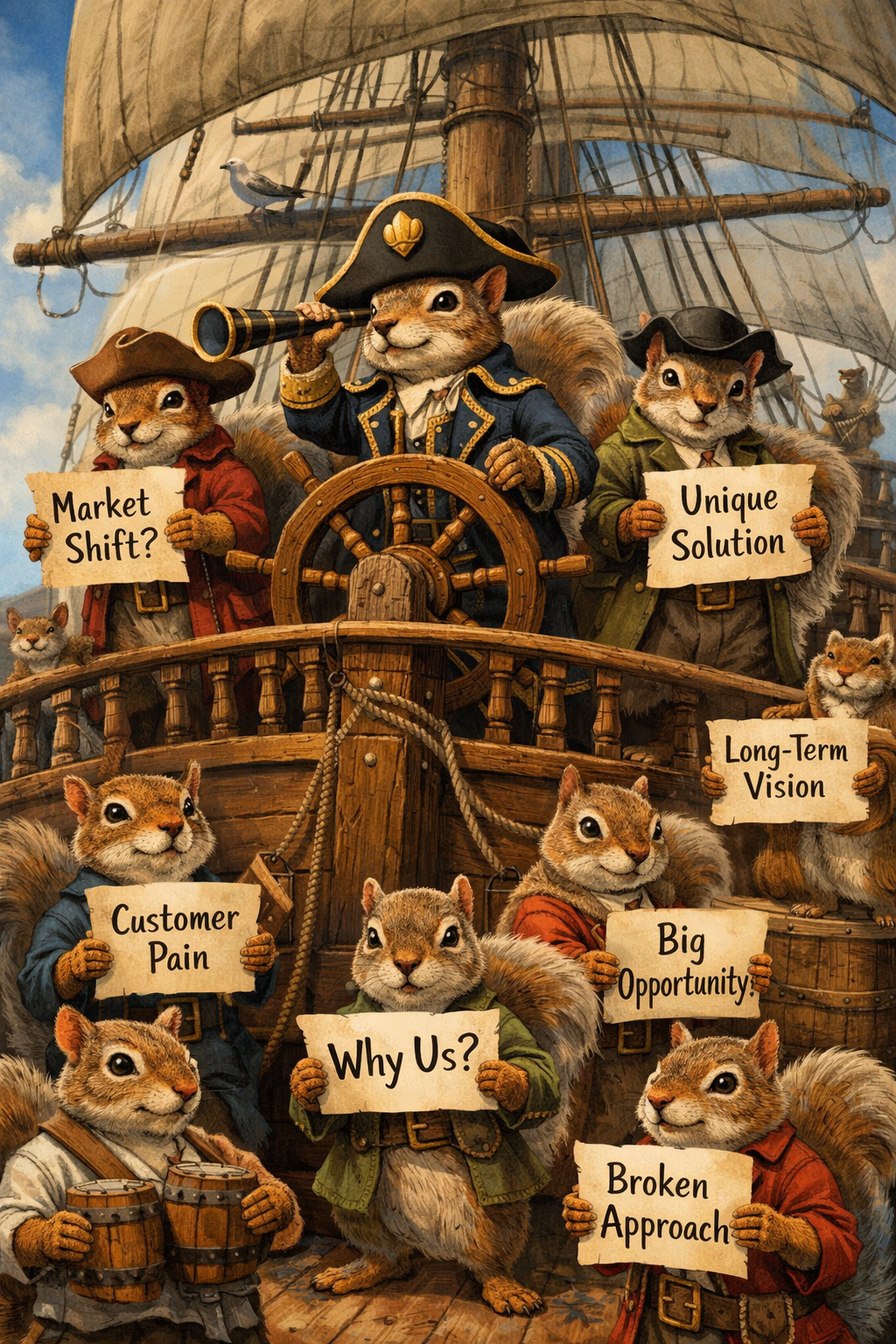
Product narrative is the discipline of defining the underlying logic of the business. It answers fundamental questions:
- What has structurally changed in the market?
- Why does that change matter to your buyer now?
- Why do existing approaches fall short?
- Why is your architecture, not just your feature set, meaningfully different?
- What becomes possible because of that difference?
When those questions are unresolved, companies drift. Marketing runs campaigns that do not compound. Sales teams improvise positioning in live deals. Product builds capabilities that impress technically but dilute strategic focus.
Leadership debates messaging every quarter. (You should refine messaging, not debate it)
Everyone is wondering. Momentum still stalls. Sales goes rogue...again.
A clear product narrative changes that.
It creates strategic alignment. Not alignment around slogans, but alignment around a shared market thesis. Product decisions reinforce the same framing that sales uses in the field. Marketing content ladders up to the same core argument leadership uses with analysts and investors. Roadmaps feel intentional rather than reactive.
Narrative becomes the organizing principle for execution.
It also creates structural differentiation. Competing feature by feature is a race to commoditization. Competing on architecture, philosophy, and problem framing is different. A strong narrative defines the category terms. It shapes how buyers evaluate options before they ever compare checklists.
That is strategic leverage.
In complex markets, particularly in AI, data, and cybersecurity, buyers are overwhelmed. They are not lacking information. They are lacking clarity. A coherent narrative reduces cognitive load. It provides a way to think about the problem that makes your approach feel inevitable rather than incremental.
This is where durable growth begins.
Durable growth does not come from louder launches or more aggressive campaigns. It comes from coherence over time. When your story remains consistent under pressure, trust compounds. When your differentiation is rooted in architecture rather than marketing language, it survives competitive noise. When your teams are aligned around a shared thesis, execution accelerates.
Developing a product narrative is not a copy exercise. It is a strategic process. It requires disciplined market analysis, deep customer insight, competitive clarity, and honest internal alignment. It often surfaces hard questions about roadmap, focus, and tradeoffs. That discomfort is part of the work.
The output is not just a messaging framework. It is a strategic spine. From it flow positioning, sales enablement, launch strategy, analyst engagement, website architecture, and content strategy. Without that spine, every initiative feels disconnected. With it, execution compounds.
In high-growth environments or volatile markets, the temptation is to pivot language constantly. New executives introduce new terminology. Campaigns reset every quarter. Messaging evolves with each competitive move.
A strong product narrative does not prevent evolution. It prevents fragmentation.
It allows a company to adapt without losing coherence.
Stop shipping features.
Start building meaning.
Because meaning is what aligns organizations, differentiates in crowded markets, and sustains growth long after the launch slide deck is archived.
Ali on Marketing